Women in the workplace: Experiences with mentoring

Women in the workplace: Experiences with mentoring
Victoria Barford and Dr. Wendy Cukier
Extensive research shows that having a mentor at work has numerous benefits for both participants and employers. Leaders, particularly women, Indigenous, and racialized leaders often cite mentorship as key to their success. But there are big gaps in our understanding of what works for whom and the best approaches to implementing coaching, mentorship and sponsorship in the workplace.
The Survey on Employment and Skills from the Environics Institute, Diversity Institute and Future Skills Centre highlights differences between the experiences of men and women with mentorship in the workplace. According to the survey of almost 6,000 Canadians, about two in five employed Canadians say they have someone at their workplace who they consider a mentor, which we define as “an experienced person who cares about your career development.” The same proportion say that they act as a mentor by sharing their experience with someone else at work to help them with their professional development.
Overall, women (42%) are more likely than men (34%) to say that they currently have a mentor. But the reverse is true when it comes to being a mentor: women (35%) are a bit less likely than men (41%) to act as a mentor to someone else at work. This difference is accentuated among older workers. Among those aged 55 and older, men are much more likely than women to be a mentor to someone else at work (40% compared to 27%). This, of course, may be a function of the fact that men, particularly older men, continue to dominate leadership roles.
More importantly, there are also gender differences when it comes to perceptions of the benefits of mentorship. Among those with a mentor, men are generally more likely than women to say that having a mentor has been very helpful to them. This is the case in three of the four areas mentioned in the survey: in improving their overall satisfaction with their job (45% of men say having a mentor has been very helpful in this area, compared to 39% of women); in preparing them to advance in their career (45% compared to 37%); and in helping them learn new work-related skills (51% compared to 43%). In one area, women are slightly more likely than men to say having a mentor has been very helpful: in helping them manage difficult situations at work (48% of women say having a mentor has been very helpful in this area, compared to 45% of men).
This gender gap in positive outcomes worsens as women progress through their careers. For men, the perceived benefits of having a mentor increase with age; for women, they decline. Among those aged 55 and older with a mentor at work, half of men, but just over one quarter (27%) of women, say the relationship has been very helpful in preparing them to advance in their career. Similarly, among those age 55 and older with a mentor at work, 67 percent of men, but only 29 percent of women, say the relationship has been very helpful in improving their overall satisfaction with their job.
Previous research has underscored the differences between coaching, mentorship and sponsorship. Coaching is considered to be more focused on performance improvement while mentors provide advice and support in navigating “the unspoken rules” in organizations. Sponsors advocate actively to open doors and create opportunities. Our results support the conclusions of earlier research that suggests that given the pervasiveness of gender bias in the workplace, professional women need more sponsorship or active advocacy on their behalf as opposed to coaching and mentorship. That research found women to be more likely than men to have a certain type of professional mentor – one who might invite them to participate in professional training programs, complete self-assessments, and so on – but less likely to have a sponsor who uses their influence within an organization to advocate for their advancement. Men, on the other hand, are more likely to experience the type of mentorship that opens doors.
Women at work not only need cheerleaders on the sidelines, but advocates on the frontlines. Effective mentorship requires the capacity to build trust, provide constructive feedback, and adapt approaches to diverse needs and circumstances. It also means being intentional both in seeking and providing mentorship in the workplace and in ensuring there are shared expectations and the competencies needed to produce results.
Our survey raises interesting questions about how mentorship and its role in the workplace are understood and what constitutes and contributes to successful mentorship. While organizations increasingly are establishing formal mentoring programs, particularly for women, Indigenous Peoples and members of equity deserving groups, our findings suggest that there may need to be more evaluation on what works for whom.
Historically, white men, who have dominated leadership particularly in the corporate sector, have been mentors and been mentored as part of the “natural” order of things in organizations. Efforts to extend and formalize mentoring to others are, it seems, producing uneven results both in terms of the experiences of those who are mentored and the impact of mentoring. While research shows that leadership is changing and becoming more inclusive, the pace remains slow and the pathways uneven.
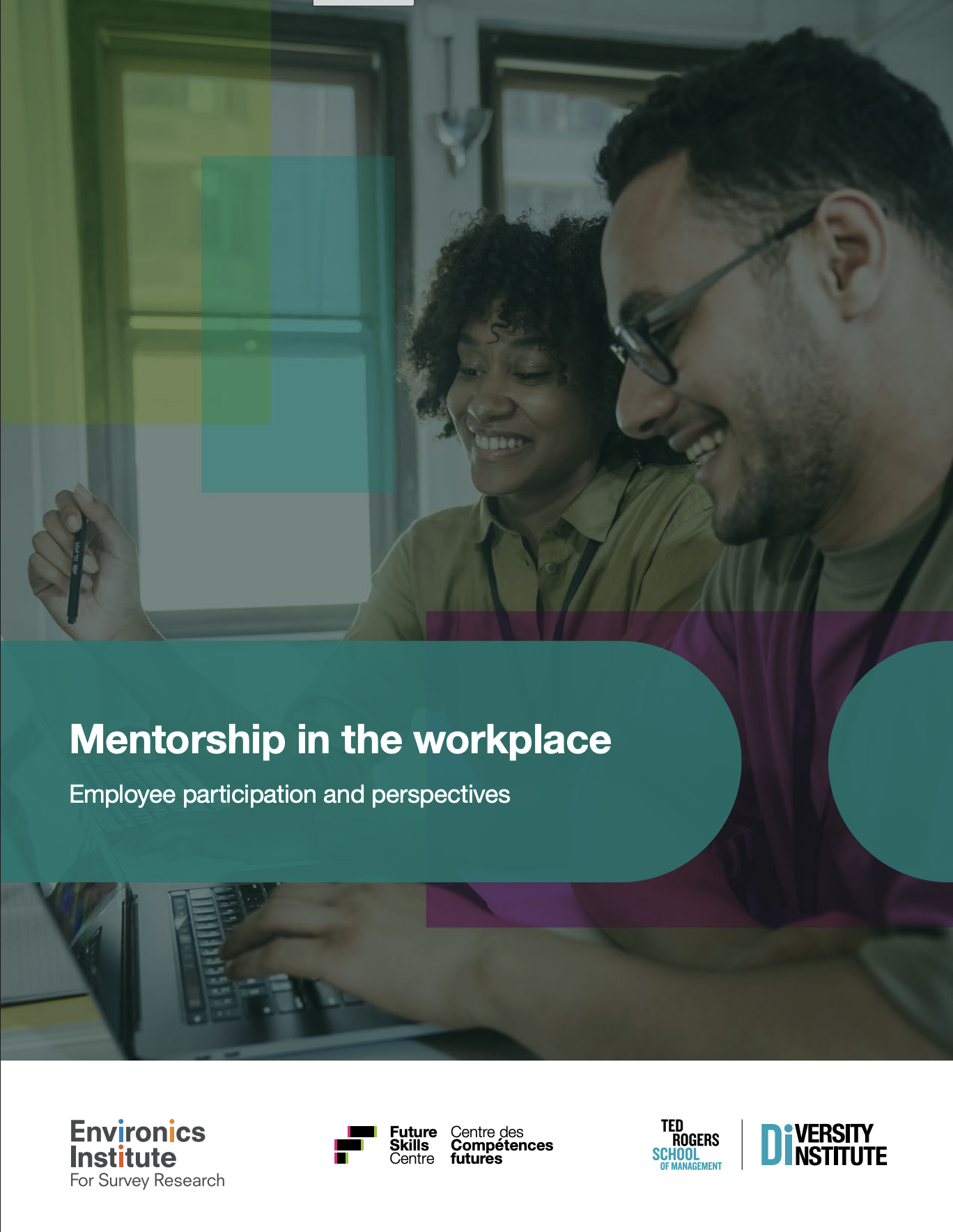 | Related reportTo learn more about the state of mentorship in workplaces in Canada, see the new Survey on Employment and Skills report Mentorship in the Workplace: Employee Participation and Perspectives |
Authors
Victoria Barford is a policy professional and a graduate from the University of Toronto’s Master of Public Policy program.
Dr. Wendy Cukier is a Professor of Entrepreneurship and Innovation, and the Academic Director and Founder of the Diversity Institute at Toronto Metropolitan University (TMU).